




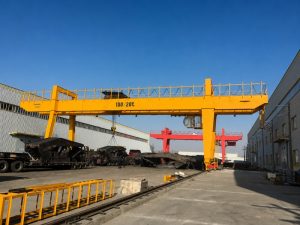
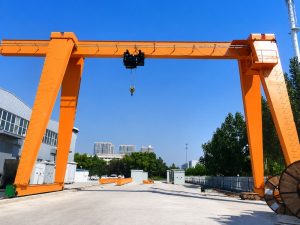
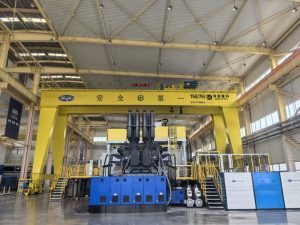
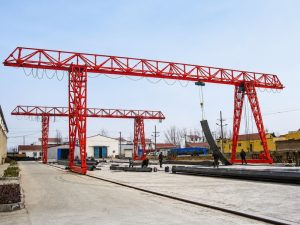

1. Introduction: Understanding the Fundamental Role of the Overhead Crane
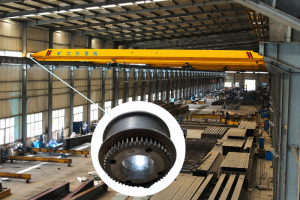
In modern industrial facilities, heavy manufacturing plants, warehouses, and logistics centers, an efficient overhead crane system serves as the primary engine for material handling operations. Selecting the correct crane architecture directly impacts daily workflow throughput, plant safety compliance, structural building requirements, and long-term operating costs. When plant managers and structural engineers evaluate overhead material handling equipment, the most critical decision involves choosing between two foundational configurations: the single girder overhead crane and the double girder overhead crane.
Selecting an overhead crane isn’t merely about purchasing lifting machinery; it requires matching mechanical engineering parameters with facility overhead clearances, runway track loadings, hook travel limits, and duty cycle demands. Installing an under-specified system leads to mechanical overload, frequent downtime, and safety hazards, while over-specifying results in unnecessary capital outlay for unneeded building support structures. This comprehensive technical guide provides an in-depth breakdown of structural differences, mechanical capabilities, financial metrics, and operational performance to help you make an informed investment decision for your facility.
2. What is the Difference Between Single Girder and Double Girder Overhead Cranes?
To directly address the core technical inquiry: What is the difference between single girder and double girder overhead cranes? The structural, mechanical, and operational distinction comes down to the bridge cross-section design, hoist trolley mounting configuration, maximum weight-bearing capacity, vertical hook clearance, and intended duty cycle.
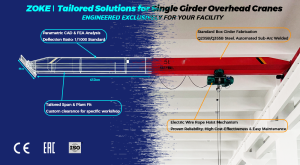
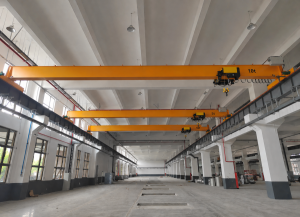
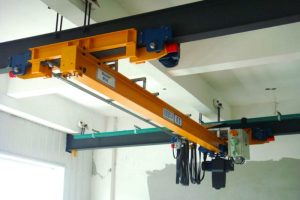
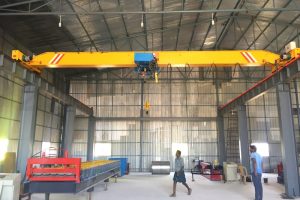
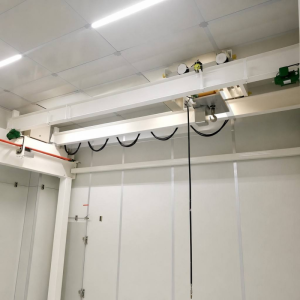
At a basic level, a single girder overhead crane utilizes a single main bridge beam spans the runway tracks. The electric wire rope hoist or chain hoist runs along the bottom flange of the main beam or sits on a monorail trolley system. This lightweight, streamlined profile makes single girder systems efficient and cost-effective for moderate capacities (typically up to 20 tons) and standard factory spans.
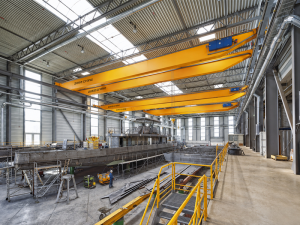
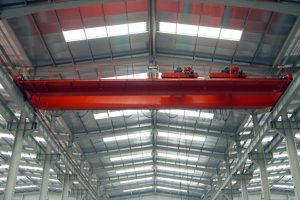
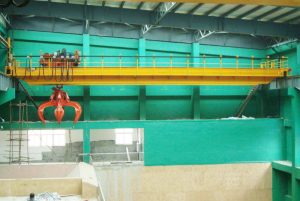
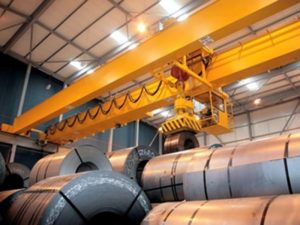
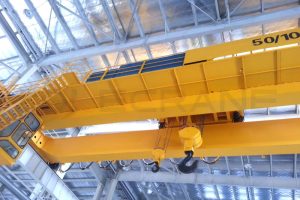
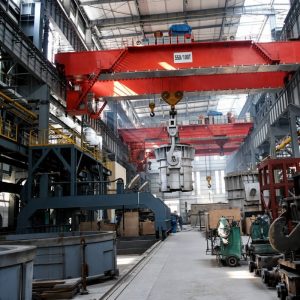
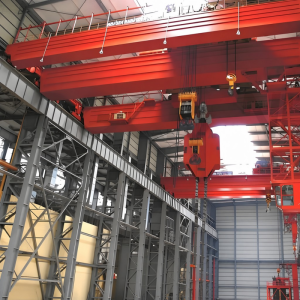
Conversely, a double girder overhead crane consists of two parallel main bridge beams mounted onto the end trucks. The hoist trolley operates on rails installed on top of these twin girders (top-running trolley configuration). This dual-beam layout dramatically increases structural stiffness, eliminates torsional deflection over long spans, and enables heavy-duty lifting capacities exceeding 500 tons. Crucially, because the hoist trolley sits on top of the bridge beams rather than hanging beneath them, double girder designs provide superior hook height—allowing the lifting hook to travel up into the space between the two girders.
Featured Summary: Single vs. Double Girder Overhead Crane
- Bridge Configuration: Single girder uses one main beam; double girder utilizes two parallel bridge beams.
- Trolley & Hoist Positioning: Single girder hoists typically hang beneath or run along the bottom flange. Double girder trolleys travel on top of the main girders.
- Lifting Capacity: Single girder overhead cranes typically handle up to 20 tons. Double girder overhead cranes easily handle 5 to 500+ tons for heavy industrial duty.
- Hook Height / Vertical Clearance: Double girder cranes maximize hook lift height by drawing the hook up between the two bridge beams.
- Deadweight & Building Load: Single girder systems are lighter, putting less strain on factory columns. Double girder systems are heavier and require robust building structures.
3. Structural Comparison: Single Girder Overhead Crane vs. Double Girder Overhead Crane
Understanding the structural mechanics of both crane configurations requires examining their individual anatomy, beam profiling, load transfer mechanics, and hoist integration.
3.1 Single Girder Overhead Crane Design and Anatomy
The structural layout of a single girder overhead crane relies on efficiency, simplicity, and weight reduction. Key structural components include:
- Single Main Bridge Girder: Fabricated from standard structural steel section beams (such as I-beams or H-beams) for light capacities, or custom-welded steel box girders for wider spans and medium capacities. Internal diaphragm stiffeners prevent structural deformation.
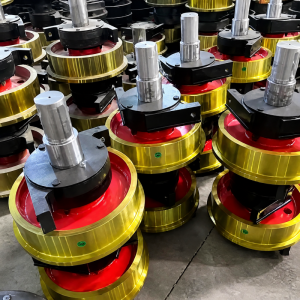
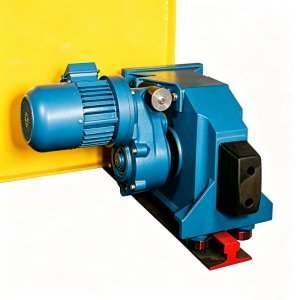
- End Trucks (End Carriages): Mounted on both ends of the main bridge girder, containing steel wheels that travel along the facility’s elevated runway rails. Equipped with soft-start geared motor drives to ensure smooth acceleration and deceleration.
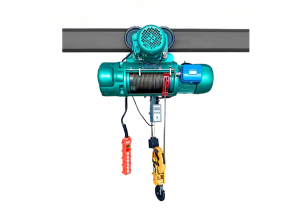
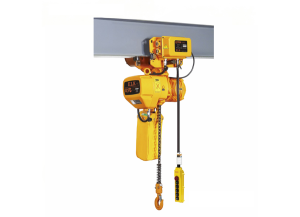
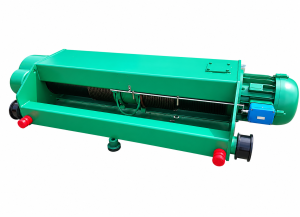
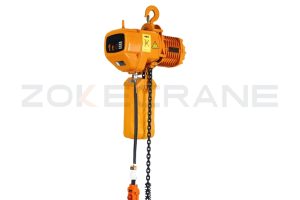
- Underhung / Monorail Electric Hoist: The lifting mechanism hangs directly beneath the bottom flange of the single bridge girder. Electric wire rope hoists or heavy-duty electric chain hoists provide precise vertical lifting and motorized trolley cross-travel.
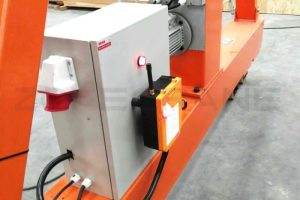
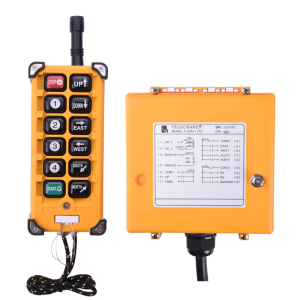
- Control Systems: Operated via an ergonomic pendant control station hanging from the hoist, or through multi-channel wireless radio remote control units.
Because the hoist trolley hangs beneath the single beam, the total structural weight (deadweight) transmitted to the building support columns is low. This makes the single girder configuration popular for existing facilities without high-load structural columns.
3.2 Double Girder Overhead Crane Design and Anatomy
A double girder overhead crane is built for high structural rigidity, extreme durability, and maximum hook coverage. Its primary structural components include:
- Twin Box Girders: Two parallel steel box girders engineered to handle high bending moments, torsional stress, and dynamic impact forces. The upper plates of both box girders feature precision-aligned steel rails for trolley travel.
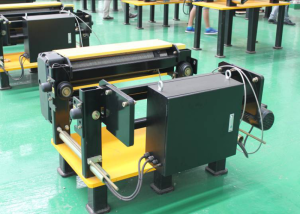
- Heavy-Duty Crab Trolley (Top-Running Trolley): A rugged frame housing the main hoisting gear, wire rope drum, motor, gearbox, brake system, and cross-travel wheel blocks. The trolley travels across the top of both girders, ensuring balanced wheel-load distribution.
- Structural End Carriages: Heavy-duty end trucks with multi-wheel arrangements (4, 8, or 16 wheels depending on capacity) designed to distribute massive wheel loads evenly along the elevated runway tracks.
- Integrated Maintenance Platforms & Catwalks: Full-length steel walkways with safety handrails installed alongside one or both bridge girders. This allows technicians to perform routine inspections, lubrication, and maintenance safely at height.
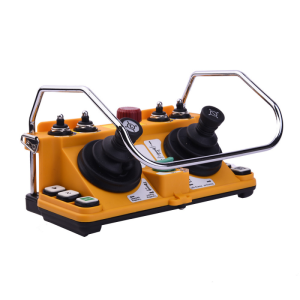
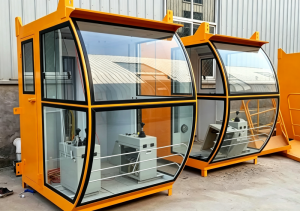
- Operator Cabin / Remote Control: Operated via high-tech wireless radio control, or an ergonomic climate-controlled operator cab mounted beneath the bridge structure for clear line-of-sight during complex lifts.
4. Key Technical Parameters: Capacity, Hook Height, Span, and Duty Class
When engineering an optimal overhead crane layout, four technical parameters determine whether a single girder or double girder construction is necessary for your operational workflow.
4.1 Lifting Capacity and Load Distribution
Lifting capacity is the primary technical division point. Standard single girder bridge cranes reliably handle working load limits (WLL) from 1 ton up to 20 tons. For loads above 20 tons, single girder construction requires excessively thick steel profiles to prevent beam deflection, making it economically unviable.
Double girder bridge cranes step in for heavy industrial demands, with standard capacities ranging from 5 tons to over 500 tons. The dual girder structure spreads concentrated loads across two primary structural members and four or more runway wheel blocks, preventing excessive structural deflection and keeping stress within safe engineering limits.
4.2 Maximum Lifting Height (Hook Clearance)
In manufacturing facilities with limited vertical headroom, hook height—the maximum vertical distance the crane hook can reach relative to the floor—is a critical metric. In a single girder configuration, the hoist body hangs directly beneath the bridge girder. This positioning reduces maximum vertical hook lift height by the height of the hoist and trolley body.
A double girder overhead crane solves headroom constraints through top-running trolley integration. Because the crab trolley rolls on top of the dual girders, the lifting hook can pull up directly between the two main beams. This design yields crucial extra vertical lifting clearance (often 1.0 to 2.5 meters higher than a comparable single girder installation), allowing plants to stack materials higher or manipulate taller industrial components without raising the building roof.
4.3 Runway Span and Bridge Rigidity
The span refers to the horizontal distance center-to-center between the parallel runway tracks. As facility spans exceed 22 to 30 meters, a single girder beam becomes susceptible to lateral sway and deflection under heavy movement. Double girder crane structures offer superior structural rigidity over long spans (exceeding 35 to 40+ meters) through their box-girder design and wide wheel base, ensuring stable, sway-free travel during high-speed operations.
4.4 ISO / FEM Duty Classes and Work Intensity
Industrial crane applications are categorized by operational frequency and load severity under international standards (ISO 4301, FEM 9.511, and CMAA):
- Light to Medium Duty (ISO M3-M5 / FEM 1Am-2m / CMAA Class A-C): Typical for assembly shops, maintenance bays, general storage, and light fabrication plants. Single girder cranes excel here due to low energy consumption and cost-effective construction.
- Heavy to Severe Duty (ISO M6-M8 / FEM 3m-5m / CMAA Class D-F): Common in steel rolling mills, foundry operations, paper manufacturing, scrap yards, container terminals, and heavy machining facilities. Double girder cranes are designed specifically for these harsh environments, handling near-continuous operation at or near maximum load capacities.
5. Cost-Benefit Analysis: Initial Investment vs. Long-Term Value
A thorough capital expenditure (CapEx) and operational expenditure (OpEx) analysis is essential when choosing an overhead crane system. Evaluating upfront purchase price alongside total cost of ownership (TCO) yields a clearer financial picture.
Initial Capital Expenditure (CapEx): Single girder overhead cranes feature lower initial capital costs. They require less structural steel, simpler electrical configurations, lighter motor drives, and lower transport fees. Furthermore, because their structural deadweight is low, the building’s support columns, runway beams, and civil foundation require less reinforcement, lowering facility construction costs.
Double girder overhead cranes carry a higher initial purchase price—typically 30% to 60% higher than single girder equivalents of similar span and basic tonnage—due to double steel box fabrication, top-running trolley assembly, dual drive systems, and heavy-duty components. They also require heavier runway beams and building columns.
Long-Term Operational Expenditure & Asset Life (OpEx): While a single girder crane costs less upfront, a double girder system provides strategic long-term return on investment (ROI) for heavy-use facilities. Features like integrated walkways simplify maintenance, reduce technician labor hours, and lower safety risks. Moreover, top-grade double girder components operate with less strain during high-duty cycles, reducing long-term component wear, gear stress, and operational downtime.
6. Comparison Matrix: Single Girder vs. Double Girder Overhead Crane
The technical comparison table below summarizes the core operational parameters separating single girder and double girder overhead crane systems:
| Engineering Parameter | Single Girder Overhead Crane | Double Girder Overhead Crane |
|---|---|---|
| Typical Lifting Capacity | 1 Ton – 20 Tons (Standard) | 5 Tons – 500+ Tons (Heavy Duty) |
| Maximum Span Length | Up to 22 – 30 meters | Up to 40+ meters |
| Hook Height / Lifting Space | Standard (Hoist hangs below bridge beam) | Maximum (Hoist trolley sits on top of beams) |
| Trolley Configuration | Underhung monorail / Low-headroom trolley | Top-running heavy-duty crab trolley |
| ISO / FEM Duty Rating | ISO M3 to M5 (FEM 1Am to 2m) | ISO M5 to M8 (FEM 2m to 5m) |
| Structural Deadweight | Lighter; minimal building stress | Heavier; requires high building load capacity |
| Maintenance Platforms | Optional auxiliary ladders/scissor lifts | Built-in full-length catwalks and platforms |
| Capital Investment (CapEx) | Lower initial purchase and installation cost | Higher initial investment; higher long-term duty value |
| Primary Applications | Light manufacturing, warehouses, assembly lines | Steel mills, paper mills, heavy fabrication, foundries |
7. Installation, Maintenance, and Structural Impact on Building Infrastructure
Integrating an overhead crane into a new or existing facility requires close coordination between civil structural engineers, plant operations managers, and the crane manufacturer.
Building Structural Considerations: Installing a double girder system introduces substantial vertical static loads, lateral dynamic impacts, and longitudinal braking forces into the facility’s support columns. Building foundations, column footings, and runway corbels must be calculated to withstand maximum wheel loads ($P_{max}$). If an existing building lacks structural reinforcement, installing a double girder crane may require expensive retrofitting. In such cases, a European-style low-headroom single girder crane offers an ideal compromise by delivering optimized hook height without overloading existing building structures.
Maintenance and Accessibility: Routine preventive maintenance—including wire rope inspection, brake adjustment, gearbox lubrication, and electrical panel checks—is essential for continuous operation. Double girder cranes simplify maintenance by providing integrated walkways along the bridge, allowing service technicians to inspect drive motors and electrical panels safely. Maintenance on single girder cranes typically requires mobile elevating work platforms (MEWPs) or scissor lifts to access the hoist assembly hanging beneath the girder.
8. Application Scenarios: Choosing the Right Overhead Crane for Your Industry
Matching the crane structure to your facility’s specific operational demands ensures long-term efficiency, safety, and return on investment.
Ideal Applications for Single Girder Overhead Cranes:
- Automotive Parts Assembly Lines: Precision handling of engines, chassis components, and sub-assemblies weighing under 10 tons.
- Light Machinery Maintenance Shops: General equipment repair and part replacement where crane usage is intermittent.
- Plastic Injection Molding Facilities: Loading and replacing small-to-medium molds into injection molding machines.
- Warehousing and Distribution Facilities: Fast, economical loading and palletizing of goods along linear bays.
Ideal Applications for Double Girder Overhead Cranes:
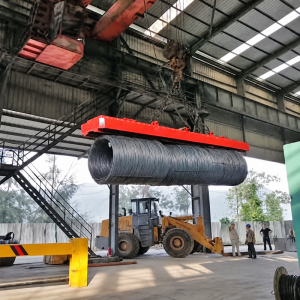
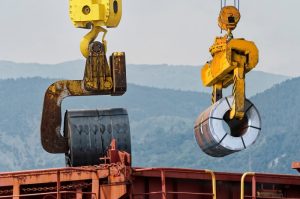
- Steel Rolling Mills & Service Centers: Handling heavy steel coils, billets, and plate bundles under high-temperature, high-duty conditions.
- Heavy Equipment Manufacturing: Moving massive mining machinery, locomotives, large press dies, and structural steel fabrications.
- Foundries and Smelting Plants: Liquid metal ladle transportation requiring specialized heat insulation, auxiliary hoists, and fail-safe dual brakes (ISO M7/M8 duty cycles).
- Hydroelectric & Thermal Power Plants: Precise installation, positioning, and overhaul of massive turbine rotors and generators requiring micro-speed positioning.
9. Advanced Customization Options from ZokeCrane Manufacturing
As a leading international designer and manufacturer in the overhead material handling industry, ZokeCrane (Henan Zhongke Crane Co., Ltd.) delivers tailored crane solutions engineered to meet rigorous international standards.
Located in the Naoli Industrial Park in Changyuan County, Henan Province—China’s largest crane manufacturing hub—ZokeCrane brings state-of-the-art manufacturing processes, certified quality management systems (ISO 9001:2000, CE, and SGS certifications), and deep engineering expertise to every project. Our manufacturing capabilities include custom technical options for both single girder and double girder overhead crane configurations:
- European-Style FEM/DIN Design Girders: Optimized box girder profiles that combine lightweight construction with high structural strength, significantly reducing wheel loads and energy consumption.
- Smart Hoist & Trolley Systems: Variable Frequency Drive (VFD) speed controls on all axes to ensure smooth acceleration, eliminate load sway, and deliver millimeter-precise load positioning.
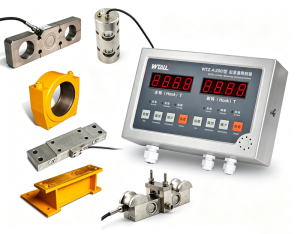
- Advanced Safety Technologies: Integrated electronic overload limiters, anti-sway control modules, real-time load monitoring displays, dual emergency brakes, and wireless remote control integration.
- Hazardous Environment Adaptations: Explosion-proof (ATEX-certified) overhead cranes for chemical processing environments, along with specialized thermal heat insulation shields for metallurgical applications.
With an annual output value reaching hundreds of millions, ZokeCrane has successfully exported advanced bridge cranes, gantry cranes, trolley systems, and electric wire rope hoists to clients in more than 11 countries—including Russia, Uzbekistan, the Philippines, Bangladesh, Australia, Qatar, Tanzania, Singapore, Saudi Arabia, Brazil, and Nigeria. We continuously optimize our product engineering and build quality to exceed international expectations on our journey toward becoming a world-renowned brand in the global overhead crane industry.
10. Frequently Asked Questions (FAQ)
Q1: What is the main difference between single girder and double girder overhead cranes?
The fundamental difference lies in their structural construction and hoist placement. A single girder crane uses a single main bridge beam with the hoist hanging underneath, making it ideal for lighter loads (up to 20 tons) and standard spans. A double girder crane features two parallel bridge beams with a top-running trolley rolling on upper rails, enabling higher lifting capacities (5 to 500+ tons), greater lifting height, and heavy-duty performance.
Q2: Which overhead crane configuration is more cost-effective for medium manufacturing plants?
For capacities up to 15-20 tons with standard runway spans, a single girder overhead crane is the most cost-effective option. It requires less structural steel, reduces building wheel-load ratings, and lowers initial purchase and installation costs. However, if your plant requires maximum hook lifting height or heavy-duty continuous cycles, a double girder crane provides better long-term performance and ROI.
Q3: How does hook height differ between single girder and double girder overhead cranes?
Double girder overhead cranes deliver superior hook height because the hoist trolley sits on top of the bridge girders, allowing the lifting hook to draw up into the space between the main beams. In single girder configurations, the hoist hangs directly below the beam, reducing available vertical clearance by the depth of the hoist assembly.
Q4: Can a single girder overhead crane runway be upgraded to a double girder system later?
Upgrading a single girder crane to a double girder crane on the same runway is rarely straightforward. Double girder cranes are heavier, have different wheel spacing, and impose significantly higher dynamic wheel loads ($P_{max}$) on building columns. A thorough structural engineering assessment of your existing columns, corbels, and runway rails is required before attempting a conversion.
Q5: What maintenance advantages do double girder overhead cranes offer?
Double girder overhead cranes typically feature full-length structural walkways and maintenance platforms built directly along the bridge. This enables service technicians to perform routine inspections, gearbox oil changes, and electrical panel maintenance safely at height, without requiring scissor lifts or external scaffolding.
Get Custom Overhead Crane Engineering Solutions from ZokeCrane
Whether you need an economical single girder overhead crane for a light assembly shop or a high-capacity, heavy-duty double girder bridge crane for severe industrial duty, ZokeCrane (Henan Zhongke Crane Co., Ltd.) provides complete turnkey design, precision manufacturing, and international support certified to ISO 9001, CE, and SGS standards.
Our engineering team works directly with your plant managers to analyze building specs, wheel loads, lift heights, and operational duty cycles—delivering tailored equipment that optimizes productivity and safety.