




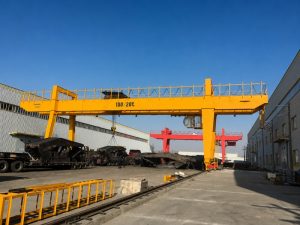
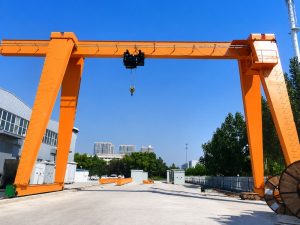
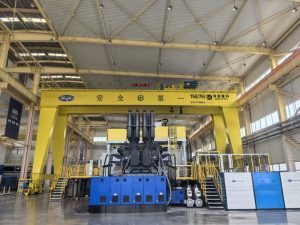
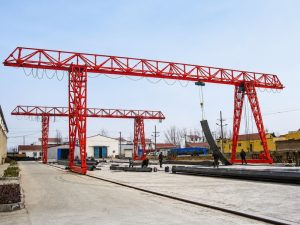
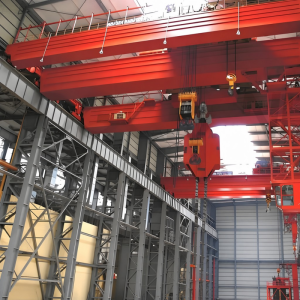
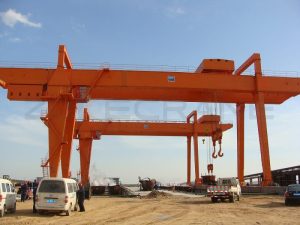
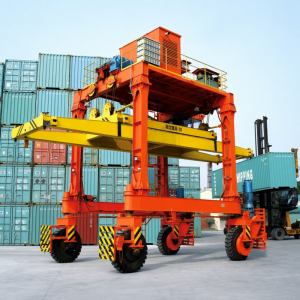
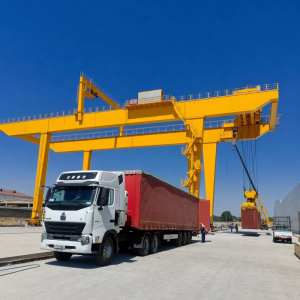
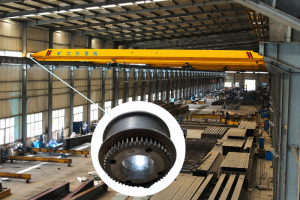

An overhead crane is the backbone of material handling in steel plants, machine shops, warehouses, and assembly lines, but it is also one of the most heavily regulated pieces of equipment on a factory floor. In the United States, the Occupational Safety and Health Administration (OSHA) governs overhead and gantry cranes in general industry through 29 CFR 1910.179. Following this standard is far more than a paperwork exercise. It helps your plant avoid expensive citations, prevents crushing, struck-by, and electrical injuries, and reduces the legal and insurance exposure that follows a serious crane incident.
Whether you are buying a new overhead crane, modernizing an existing bridge crane, or preparing for an OSHA walkaround, this guide explains what the rules require, how they relate to the ASME B30.2 standard, and how to keep your crane program audit-ready.
What are OSHA requirements for overhead cranes?
OSHA requirements for overhead cranes are set mainly by 29 CFR 1910.179, the general industry standard for overhead and gantry cranes. They require clearly marked rated loads, minimum clearances from obstructions, a hoist upper-limit switch, properly rated brakes, guarded electrical and moving parts, regular inspections, load testing of new or altered cranes, monthly wire rope inspections with records, and operators who are competent and trained for the equipment they use.
In practice, these rules fall into four groups: how the crane is built, which safety devices it carries, how it is inspected and maintained, and how people operate it. The sections below cover each group in detail.
Overview of OSHA Standard 29 CFR 1910.179
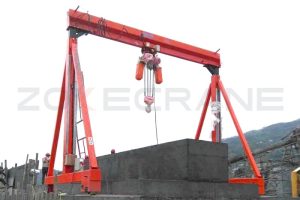
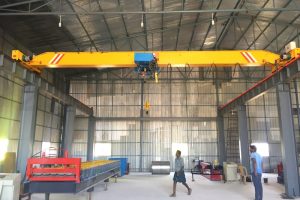
Definition and scope. 29 CFR 1910.179, titled “Overhead and gantry cranes,” covers the design, installation, inspection, testing, maintenance, and operation of overhead and gantry cranes used in general industry. It applies to top-running bridge cranes with single or multiple girders and top-running trolley hoists, as well as semi-gantry cranes, cantilever gantry cranes, wall cranes, storage bridge cranes, and other equipment with the same fundamental characteristics. Cranes used in construction work fall under a different rule, 29 CFR 1926 Subpart CC, so factories, workshops, and warehouses should focus on 1910.179.
Generally, the design and construction provisions are aimed at cranes built and installed after August 31, 1971, while the operating, inspection, testing, and maintenance provisions apply to cranes in service regardless of age. An older overhead crane therefore cannot ignore inspection or operating rules simply because it was built long ago.
How OSHA relates to ASME B30.2. ASME B30.2 is a voluntary consensus standard published by the American Society of Mechanical Engineers for overhead and gantry cranes. OSHA’s crane rule traces its roots to earlier editions of the ANSI B30.2 standard and to Crane Manufacturers Association of America (CMAA) Specification 70, which is why the two documents look similar. The key difference is legal weight. 1910.179 is federal law and OSHA can cite you directly for violating it. ASME B30.2 is not law by itself, but it is regularly revised, goes into much more engineering detail, and OSHA can point to it as evidence of recognized industry practice when it evaluates a hazard. The safest plants treat OSHA as the legal floor and ASME B30.2 as the best-practice ceiling.
General Design and Structural Safeguards
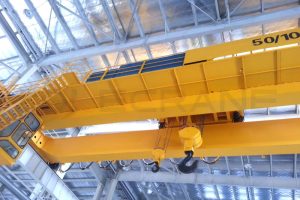
Rated load marking. The rated load of an overhead crane must be plainly marked on each side of the crane. If the crane has more than one hoisting unit, each hoist must show its own rated load, either on the hoist or on its load block, and the marking must be clearly legible from the ground or floor. Practical tips include:
- Use large, high-contrast lettering (tons or pounds) that can be read from the working floor
- Re-apply markings after repainting, repairs, or rebuilds
- Make sure markings match the manufacturer’s capacity plate and any de-rating after modification
Clearances. OSHA requires a minimum of 3 inches overhead (vertical) and 2 inches laterally (horizontal) between the crane and any obstruction, such as roof trusses, columns, ducting, pipework, or fixed equipment. These distances protect workers from being caught between a moving crane and a fixed object and prevent the crane from striking the building structure during travel or sway. Remember that these are minimum figures. Many engineers specify larger allowances to account for runway deflection, rail wear, thermal expansion, and building settlement.
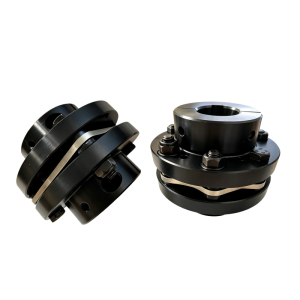
Guarding of moving parts. Exposed moving parts that could create a hazard in normal operation, such as gears, couplings, set screws, chains, and sprockets, must be guarded. Guarding is checked closely during inspections because it is an easy item for a compliance officer to see.
Operational Controls and Safety Devices
Upper limit switch. The hoisting motion of electric traveling cranes must be equipped with an overtravel limit switch in the hoisting direction. This device cuts power to the hoist when the hook block reaches its highest safe position. Without it, the hook block can strike the hoist or trolley structure, a condition known as two-blocking, which can snap the wire rope and drop the load. Test the limit switch at the start of every shift, using a light touch with no load on the hook. In addition, a lower limit device is widely used to ensure that at least two full wraps of rope always remain on the drum, as required by ASME B30.2 and most manufacturers.
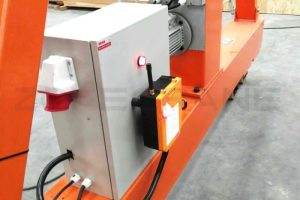
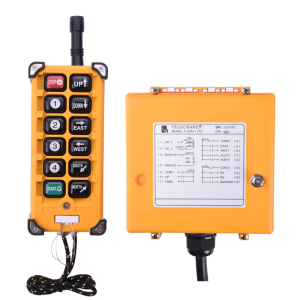
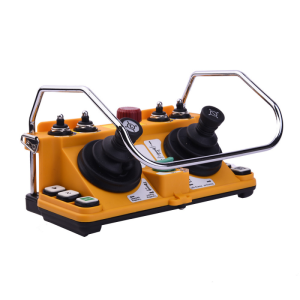
Pendant controls and emergency stops. Pendant pushbutton stations must be clearly marked to identify the function of each button. Controls must return automatically to the off position when released, which is the classic “deadman” principle. Operators need an immediate way to cut power in an emergency, and modern practice is to fit a clearly marked emergency stop on every pendant and radio transmitter, plus a main disconnect that can be locked out. For wireless remote controls, the receiver should stop all crane motion if the signal is lost or the transmitter is switched off. Each transmitter should be paired to a single crane, so an operator cannot move the wrong crane by mistake.
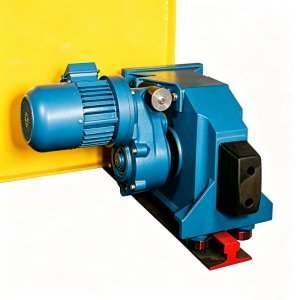
Brakes and overload protection. Each independent hoisting unit must have at least one self-setting brake that applies automatically when power is removed. Hoist brakes must be able to hold the load with a safety margin. The standard calls for a brake torque of not less than 125 percent of the rated load hoisting torque at the point where the brake is applied. Bridge and trolley travel brakes must be capable of stopping the crane within a reasonable distance and holding it in position.
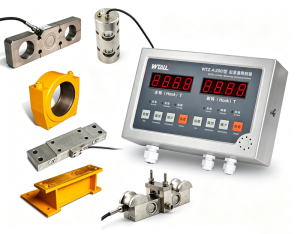
On overload protection, the core OSHA rule is simple: the rated load must never be exceeded. Hoist ropes are designed with a generous design factor, commonly 5:1 under industry specifications, so the rope itself has a margin. 1910.179 does not spell out a mandatory overload limiter for every crane, but fitting one is considered good practice, particularly where load weights vary or several operators share the same crane. Many buyers now specify an overload limiter as standard.
Crane Operator Qualification and Training Mandates
Unlike the construction crane rule, OSHA’s general industry crane standard does not set up a detailed federal operator licensing system. Instead, the employer must make sure that only competent, properly trained, and physically capable people operate the crane. In practice, a defensible training program covers three parts:
- Theory: crane types and components, rated capacity and why it must never be exceeded, center of gravity, sling angles and rigging basics, hand signals, load-path planning, and hazard awareness such as working near energized runway conductors
- Practical training: supervised hands-on operation of the actual crane, smooth start-and-stop technique, controlling load swing, pre-shift function tests of limit switches, brakes, and controls, and emergency procedures
- Evaluation: a written test and a practical skills assessment, with records kept, plus refresher training after incidents, equipment changes, or observed unsafe behavior
OSHA’s operating rules also set basic conduct that every operator must know. These include never carrying loads over people, never hoisting a load with a side pull, never using the crane to lift people, testing controls at the start of each shift, and applying lockout/tagout (29 CFR 1910.147) before maintenance. Some state plans add their own operator certification requirements, so check your local rules.
Designated Person vs. Qualified Person. These two terms are used throughout crane safety rules, and the difference matters:
- A designated person is selected or assigned by the employer as competent to perform specific duties, such as daily inspections, rigging, or signaling.
- A qualified person has a recognized degree or certificate of professional standing, or extensive knowledge, training, and experience, and has demonstrated the ability to solve problems related to the subject, for example an engineer who evaluates a modified crane or a repaired girder.
Neither title is a license issued by OSHA. Both are determined by the employer, who must be able to show why each person meets the description.
OSHA Overhead Crane Safety Equipment and Guarding Checklist
Use this checklist during your monthly walk-around and before every OSHA visit. It highlights the items inspectors most often examine on an overhead crane.
Required inspection and testing cadence
| Activity | Frequency | Who performs it | Key notes |
|---|---|---|---|
| Initial inspection and test | Before first use of a new, altered, or extensively repaired crane | Designated person | Includes operational test and rated load test; keep the test report on file |
| Frequent inspection | Daily to monthly, depending on service | Operator or designated person | Check hooks, ropes, brakes, limit switches, controls, and operating mechanisms |
| Periodic inspection | Every 1 to 12 months, depending on severity of use | Designated person | Complete inspection of the crane; keep dated reports on critical items such as brakes, hooks, and ropes |
| Wire rope inspection | At least monthly for running ropes | Designated person | Certification record with date, signature, and rope identifier kept on file |
| Rated load test | After alteration or major repair | Designated person, with qualified person as needed | Test load not more than 125% of rated load unless the manufacturer recommends otherwise |
Hook Safety Latches and Wire Rope Standards
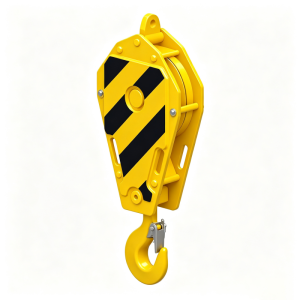
Hooks. Hooks must be inspected for cracks, deformation, excessive throat opening, twisting, wear in the saddle area, and damage to the latch. Hooks that show these defects must be removed from service. Safety latches are strongly expected on overhead crane hooks. They stop slings from slipping off under slack conditions. They should only be omitted where a latch would create a greater hazard, and that decision should be documented.
Wire rope. All running ropes must be thoroughly inspected at least once a month, with a certification record kept on file. A rope should be replaced when it shows defects such as:
- Twelve randomly distributed broken wires in one rope lay, or four broken wires in one strand in one rope lay
- Wear of one-third of the original diameter of the outside individual wires
- Kinking, crushing, bird-caging, or other distortion of the rope structure
- Heat damage, corrosion, or broken or cracked end connections
Checklist for hooks and ropes:
- Latch present, springs working, and not bent or jammed
- Hook throat opening within manufacturer limits, with no visible twisting
- Rope properly seated in drum grooves and sheaves, with at least two full wraps on the drum at the lowest point
- Rope lubricated, free of kinks, with end terminations secure
- Monthly rope inspection record present and signed
Warning Devices and Alarms (Audible & Visual)
Cab-operated overhead cranes must be fitted with a gong or other effective warning signal so that workers on the floor know the crane is moving. Many plants add the following to floor-operated cranes as well, because noise and congestion make it easy for workers to miss a moving load:
- Audible travel alarms or horns triggered by bridge and trolley motion
- Flashing beacons or strobe lights that show when the crane is energized or moving
- Floor-projected lights or laser markers that show the load path
- Warning signs at the aisle ends and near the runway conductors
Test every warning device at the start of the shift as part of the pre-use check. A device that is installed but not working will not satisfy an inspector.
Electrical Enclosures and Track Runway Bumpers
Electrical safety. Overhead cranes operate near energized conductors and in dusty or wet environments, so electrical safety is central to compliance. Key points:
- Exposed current-carrying parts must be guarded or enclosed, and enclosures should be rated for the environment (dust, moisture, corrosion)
- A main disconnect switch that can be locked out must be available, in line with lockout/tagout rules
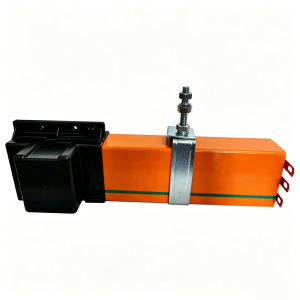
- Runway conductors, festoon systems, and collector shoes should be inspected for wear, arcing, and loose connections
- Wiring should be properly supported, labelled, and protected from mechanical damage and heat
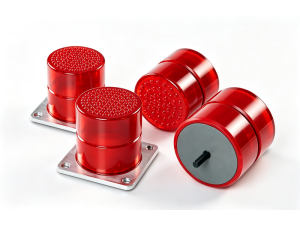
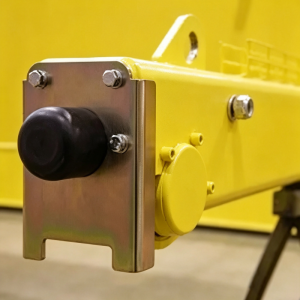
Bumpers and stops. Bridges and trolleys should carry bumpers or stops designed to absorb impact if they reach the end of travel, and the runway should have rail stops at both ends. Inspect these regularly for deformation, loose fasteners, and cracked welds. Poorly maintained stops are a common finding because they are often hidden at the far ends of the building, and nobody looks at them until a crane runs into them.
Penalties for Non-Compliance with OSHA Overhead Crane Regulations
Compliance failures carry real costs. Beyond fines, an uncorrected crane hazard can lead to injuries, production shutdowns, higher insurance premiums, and civil lawsuits. OSHA classifies violations by severity and employer intent, and each class has its own penalty range.
Common OSHA Inspection Findings: Serious, Willful, and Repeat Violations
| Violation class | Description | Crane example | 2026 maximum penalty |
|---|---|---|---|
| Other-than-serious | Direct relationship to safety but unlikely to cause death or serious harm | Missing minor labeling or incomplete inspection paperwork | Up to $16,550 per violation |
| Serious | Hazard with a substantial probability of death or serious physical harm that the employer knew or should have known about | Inoperative hoist limit switch, worn rope left in service, unguarded moving parts | Up to $16,550 per violation |
| Willful | Employer knowingly disregards the law or shows plain indifference to employee safety | Continuing to operate a crane after a known brake failure | Up to $165,514 per violation (statutory minimum $11,823) |
| Repeat | Substantially similar to a previous citation | Same missing rated load marking found again at another inspection | Up to $165,514 per violation |
| Failure to abate | Hazard not corrected by the abatement date | Limit switch still not repaired after the deadline | Up to $16,550 per day unabated, generally limited to 30 days |
Frequently cited crane problems include missing or illegible rated load markings, inadequate clearance from obstructions, inoperative or missing hoist limit switches, skipped periodic inspections or missing records, wire ropes used beyond removal criteria, defective hooks or damaged latches, loads carried over people, and maintenance performed without lockout/tagout. These amounts are federal maximums for 2026, and OSHA adjusts them periodically for inflation, so check the current figures. State-plan states may use their own amounts.
Penalty Amounts and the Correction Process
OSHA does not simply charge the maximum. Penalties are calculated from the gravity of the violation, then adjusted for employer size, good faith, and history. Willful and repeat violations receive little or no reduction, which is why they reach the top of the range so often.
If your plant receives a citation, follow a structured response:
- Review the citation and notification of penalty. OSHA has up to six months after a violation to issue a citation, and the document lists each item, its classification, the penalty, and the abatement date.
- Post the citation. It must be displayed near the affected work area for three working days or until the hazard is corrected, whichever is longer.
- Decide whether to contest. You have 15 working days from receipt to contest, request an informal conference, or negotiate a settlement.
- Correct the hazard by the abatement date. Repair or replace the faulty equipment, retrain operators, and update inspection procedures.
- Certify abatement. Submit the required documentation showing the hazard has been corrected.
- Prevent recurrence. Update your written crane inspection program, assign accountable owners, and audit regularly.
Comparison Matrix: OSHA 1910.179 vs. ASME B30.2 Standards
| Feature | OSHA 29 CFR 1910.179 | ASME B30.2 |
|---|---|---|
| Legal status | Federal regulation with the force of law | Voluntary consensus standard |
| Issued by | U.S. Department of Labor, OSHA | American Society of Mechanical Engineers |
| Enforcement | Citations and monetary penalties | Not directly enforceable unless adopted by law, contract, or employer policy |
| Scope | Overhead and gantry cranes in general industry | Overhead and gantry cranes (top-running bridge, multiple girder, top-running trolley hoist); related volumes cover underhung and single girder equipment |
| Level of detail | General performance requirements | Detailed engineering, inspection, and operating criteria |
| Update frequency | Core text changes rarely | Periodically revised to reflect new technology |
| Operator training | Employer must ensure competent operators; limited detail | Detailed expectations for operator qualification, physical fitness, and training |
| Inspection | Frequent and periodic inspections, dated reports on critical items, monthly rope inspection | Detailed criteria and checklists for frequent and periodic inspections |
| Testing | Operational and rated load tests for new or altered cranes | Similar tests with more detailed procedures |
| Practical role | Legal minimum requirement | Recognized best practice, often cited as evidence of industry norms |
The best strategy is to comply with both. OSHA tells you what you must do to stay legal, and ASME B30.2 shows you how leading plants do it in daily practice.
Frequently Asked Questions (FAQ)
Does OSHA require a load test for overhead cranes?
Yes, in specific situations. Before initial use, new and altered cranes must go through an operational test, and cranes that are altered or extensively repaired must also undergo a rated load test. The test load should not exceed 125 percent of the rated load unless the manufacturer recommends otherwise, and the test report must be kept on file where it is readily available. Routine annual proof-load testing is not required by 1910.179 for cranes already in service, but regular frequent and periodic inspections are.
What are the clearance requirements around overhead crane runways?
OSHA requires a minimum of 3 inches of overhead (vertical) clearance and 2 inches of lateral (horizontal) clearance between the crane and any obstruction. Many designers add larger margins to cover runway deflection and rail wear.
Are safety latches on overhead crane hooks mandatory under OSHA?
In practice, yes. 1910.179 focuses on hook inspection and condition rather than spelling out a standalone latch rule, but consensus standards such as ASME B30.10 call for latches, and compliance officers expect working latches on hooks used for slinging. Latches may be omitted only where they would create a greater hazard, and that decision should be documented. Confirm requirements with your OSHA area office or state plan.
Who can legally certify an overhead crane under OSHA rules?
OSHA does not certify cranes or issue crane licenses in general industry. The employer must make sure inspections and tests are performed by a designated person, and a qualified person such as a professional engineer should assess repairs and modifications. Many plants also hire third-party crane inspectors for periodic inspections. Some states have their own certification programs, so check local requirements.
Ensure Full OSHA Compliance with ZokeCrane Overhead Crane Systems
Meeting OSHA requirements starts with choosing an overhead crane that is built correctly from day one. ZokeCrane (Henan Zhongke Crane Co., Ltd.) is a trusted manufacturer of bridge and gantry cranes, located in the Naoli Industrial Park in Changyuan County, Henan Province, China’s largest crane manufacturing base. Our factory holds ISO 9001:2000, CE, and SGS certifications, and we have continuously optimized our bridge cranes, trolley systems, and wire rope electric hoists to meet international standards, with many key performance parameters at industry-leading levels.
We have exported cranes to Russia, Uzbekistan, the Philippines, Bangladesh, Australia, Qatar, Tanzania, Singapore, Saudi Arabia, Brazil, and Nigeria, so we are used to adapting each crane to the local rules of the customer’s market. When specified, our engineers can configure features that support OSHA 1910.179 and ASME B30.2 expectations, including rated load markings, hoist upper and lower limit switches, self-setting hoist brakes, overload protection, emergency stops, warning devices, guarded electrical components, and bumpers and rail stops.
Ready to get started? Send us your factory drawings, span, lifting height, rated capacity, duty class, power supply, and the standards you need to meet, and our engineering team will prepare a customized overhead crane quotation. Visit www.zokecrane-cn.com to contact ZokeCrane today.